
Why register your dance company?
Registering a dance company is essential to make your structure legal and officially recognized by institutions and potential partners. Here are some key advantages:
- Easier hiring: As a registered entity, your dance company can legally hire staff while complying with social and tax obligations related to employment in the cultural sector.
- Legal protection: Registering your association, school, or dance studio helps protect your personal assets, especially in the event of debts or legal disputes.
- Access to grants: Dance companies can apply for grants from the government, local authorities, or private organizations.
- Credibility with partners: A registered dance structure gains legitimacy, which is essential for developing partnerships.
Questions to consider before registering your dance company
Before starting the registration process, it is important to think through several strategic and organizational aspects. Here are the main questions to consider:
1. What is the artistic vision of your dance company?
A dance company should be built around a clear artistic vision. What themes or aesthetics do you want to explore? What type of audience are you targeting?
2. What legal structure will your dance company have?
The legal form will depend on the size of your dance organization, whether you plan to hire staff, the level of legal protection required, the expected revenue, and other factors. The most common options in France are a non-profit association (under the 1901 law), a sole proprietorship, or a limited liability company (SARL).
3. How will you finance your dance company?
Beyond public grants, what other funding sources are available? Prepare a projected budget to anticipate expenses such as salaries, production costs, and communication.
4. What is your communication strategy?
Communication is essential to promote your dance company and expand your network. What is your visual identity? Will you use social media or a website? Will you send newsletters to promote your performances?
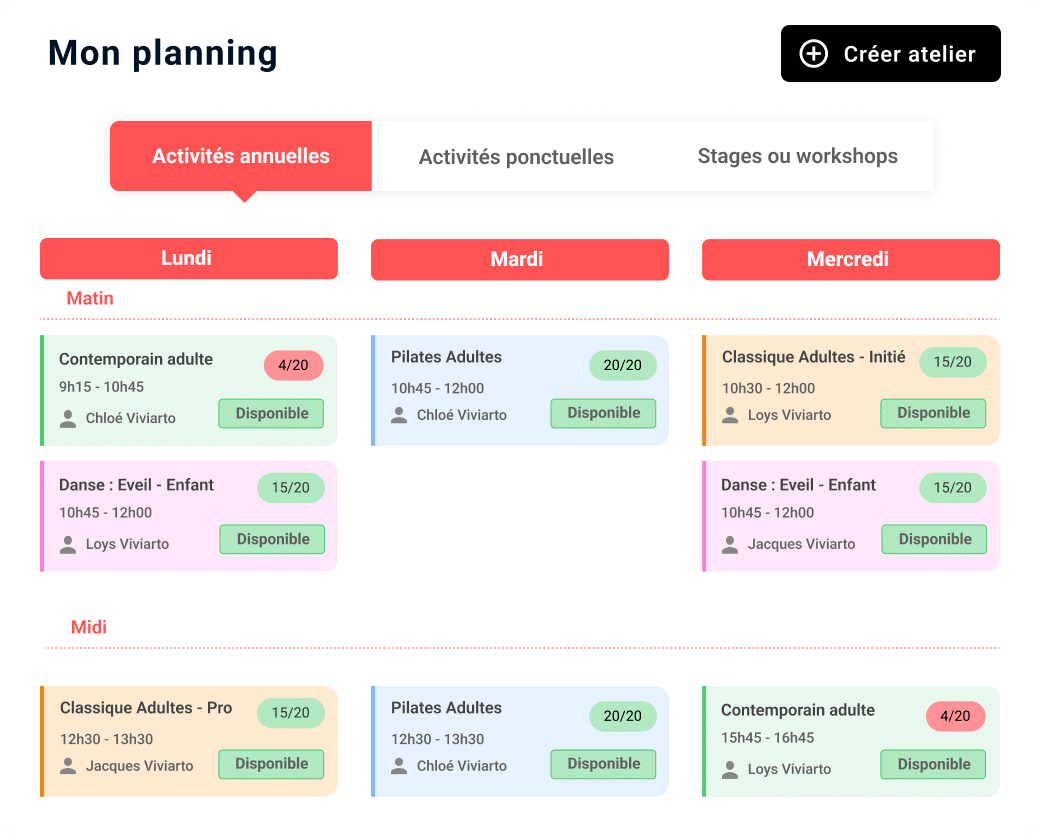
Once your structure is officially registered, you can rely on Viviarto to support the growth of your dance organization. Viviarto offers 35 tools designed to simplify daily management, from scheduling and recruiting new students to handling finances and invoicing.
Steps to register your dance company
Once you have answered these questions, here are the steps to officially register your dance school, studio, or association:
1. Choose the legal structure
The non-profit association status (under the French 1901 law) is often preferred by dance companies. Here are the main steps to register an association:
- Draft the association’s bylaws: This document formalizes the existence of the company and defines how it operates (role of the president, treasurer, objectives of the company, etc.).
- Hold a founding general meeting: This meeting validates the bylaws and appoints the association’s directors.
- File the bylaws with the prefecture: Once drafted, the bylaws must be submitted to your local prefecture or sub-prefecture to receive the official registration receipt.
- Publication in the Official Journal: After filing with the prefecture, the creation of your dance company must be published in the Official Journal of Associations to be officially recognized.Officiel des Associations pour être reconnue officiellement.
2. Open a bank account
Once your structure is registered, you must open a bank account in the name of the dance company.
3. Take out public liability insurance
Every dance company must take out professional public liability insurance. This covers any damage you may cause to third parties in the course of your activities.
4. Manage tax and social obligations
If your dance company hires dancers, technicians, or administrative staff, you must declare them to the relevant social security authorities (such as URSSAF in France). You will also need to pay social contributions (employer and employee charges).
From a tax perspective, non-profit dance associations may benefit from corporate tax exemptions under certain conditions, particularly if their activities remain within a cultural and educational framework.
5. Seek funding
As soon as your dance school, studio, or association is officially registered, you can begin seeking funding, especially public grants. It is important to prepare a strong funding application that highlights your artistic project, cultural impact, and the intended use of the requested funds.

6. Organize the management of your dance company
This is the time to implement the tools that will make daily management easier. Whether you need to organize dance classes, manage schedules, or communicate with your team, these are the key elements to consider when building the management of your dance association, studio, or school.
Congratulations! By asking the right questions and following the necessary steps, you have successfully registered your dance association, studio, or school. Now continue reading to learn more about how a dance company operates.