

1. Assess your operating costs
Before you set prices for your dance classes, it’s essential to understand all the costs involved in running your dance organization. Here are a few items to consider:
- Room rental: studio or dance hall rental fees.Teacher pay: salaries or fees for dance instructors.Equipment and supplies: the cost of dance equipment, costumes and supplies.Insurance: liability insurance and any other coverage you need.
- Administrative costs: costs related to administration, such as dance association management software, bank fees, etc. Investing in digital tools is a great way to become more efficient. Read our article on the essential tools for running a dance organization.
- Marketing and promotion: budget for marketing and promotional activities.
2. Analyze the local market
To set competitive prices, it’s important to understand your local market. Look at the other dance organizations in your area:
Competitor prices: find out what other schools and studios charge for dance classes.
Offers and services: compare the types of classes offered, class length, quality of facilities and instructor qualifications.
Target audience: identify your target audience and how much they’re willing to pay for dance classes.
3. Price your dance classes based on the value you add
Your dance class prices should reflect the added value you offer. Think about what makes your classes unique:
- Teacher qualifications: experienced, certified instructors.Class program: a variety of dance styles and skill levels.Facilities: quality studios and modern equipment.
- Additional services: workshops, shows, special events, personalized follow-up. Learn more about organizing an end-of-year dance show
- Reputation: your dance school or studio’s reputation plays a crucial role. A well-established organization known for its excellence will naturally attract more students willing to pay higher prices to enjoy the quality and prestige of your dance classes.

4. Structure your dance class pricing
Once you have a good understanding of your costs and your competitors, you can structure your dance class pricing in a clear, attractive way. Here are a few approaches to building an effective pricing structure:
Types of pricing to set up
Drop-in rates offer per-class prices for students who prefer flexibility.
Monthly or annual memberships. Offer reduced rates for students who commit long-term, with monthly or annual membership options. This encourages student loyalty, provides stable income for your school and simplifies administration. Example: a monthly membership that gives unlimited access to all classes or a set number of classes per week.
Multi-class packages: offer discounts for signing up for several classes a week. For example, you can offer a 10-class package at a discount compared with the individual class price. This encourages students to take more classes, which increases their engagement and progress.
Extra options
Offer discounts for specific groups such as children, students, families or group registrations. Making classes more accessible to different segments of your audience helps build a diverse community.
Offer one or two free trial classes to attract new students. Prospective students can experience the atmosphere of your school and the quality of the teaching with no initial commitment.
Create special packages for one-off events, workshops or intensive courses. This sparks extra interest and attracts students who want to improve specific aspects of their dancing.
And don’t forget registration and equipment fees. You may want to include an annual registration fee that covers administration and basic equipment. This helps cover your initial costs and administrative expenses. For example, you could charge a €30 annual registration fee that includes a school T-shirt and discounts on special events.
By structuring your dance class pricing in a clear, attractive way, you can meet your audience’s varied needs while keeping your organization financially sustainable. Well-designed, flexible pricing can attract more students, build loyalty and help your school or association thrive.
5. Communicate your prices
Your pricing should be communicated transparently and be easy to find:
- Website: Display your prices clearly on your website.
- Brochures and flyers: Hand out information materials with pricing details.
- Social media: Use your social platforms to inform and attract prospective students.
Using Viviarto for communication
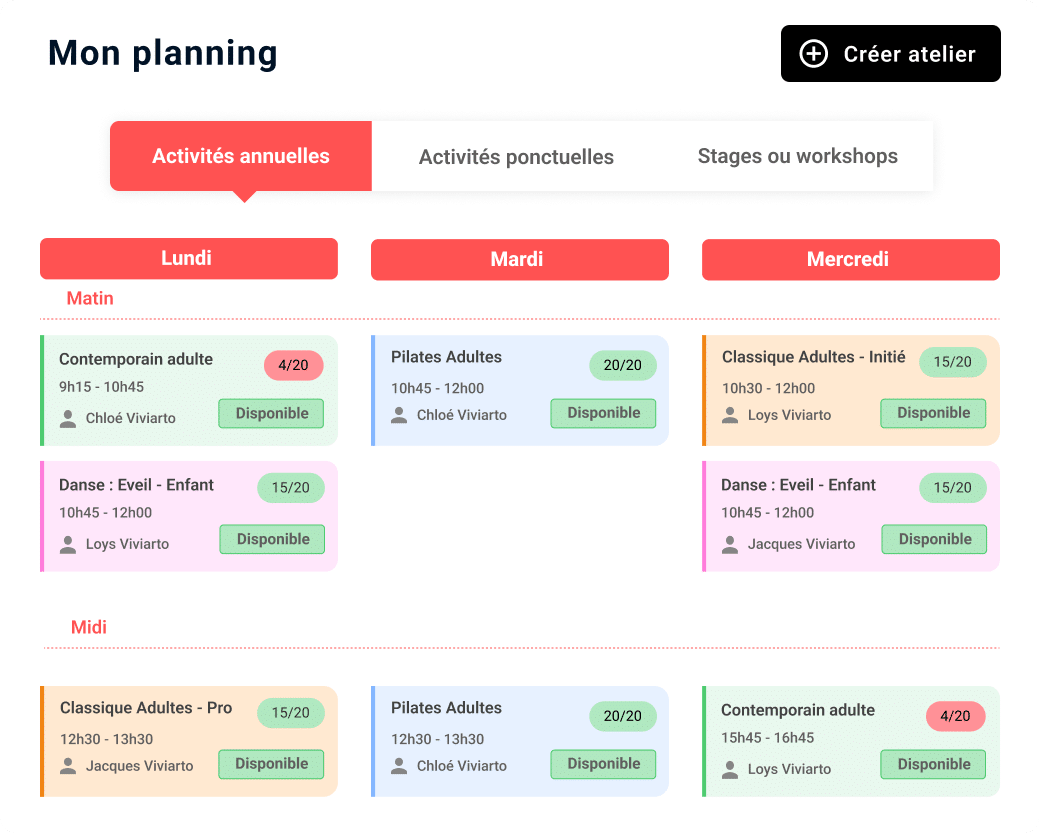
Viviarto is complete management software for dance schools and associations. With Viviarto, students can register online and easily view the dance class schedule and all available rates, making the process transparent and convenient.
The benefit is that the software centralizes all pricing information and lets students make informed choices when they register.
By using digital tools like Viviarto, you can not only structure your pricing effectively but also communicate it clearly and transparently, making registration easier and keeping students happy.

6. Adjust your prices regularly
Costs and market conditions change, so it’s important to review and adjust your dance class prices regularly:
- Review your costs and prices every year.Take feedback from students and parents into account.Adjust your prices as your operating costs rise.
Conclusion
Setting prices for the dance classes at your school or association is a delicate process that requires a thorough understanding of your costs, your market and the value you offer. By carefully assessing these elements and structuring your pricing in a clear, attractive way, you can attract and retain students while keeping your organization financially sustainable. Remember to communicate your dance class prices transparently and adjust them regularly based on your needs and market conditions.
Dance class pricing, calculated without spreadsheets
Multi-class rates, family discounts, memberships, class cards or drop-in classes: Viviarto applies your pricing rules at registration and collects payments online.



