In this article, you’ll discover:
- what association patronage really is
- the forms of patronage suited to dance associations
- the legal and tax framework you need to know
- practical advice for building an effective, lasting approach
The goal is to give you a clear, practical view of patronage for an association, so you can turn it into a real growth lever for your artistic and educational project.
What is patronage for an association?
Definition of association patronage
Association patronage is support given by a company or an individual to an association, without seeking any direct commercial benefit. This support serves the public interest and very often concerns cultural and artistic fields.
For a dance association, this support can be used to:
- fund a show or a new choreographic work
- equip dancers with gear or costumes
- structure the school’s management and communication
Patronage thus supports projects that promote access to dance, artistic transmission and cultural vitality in local communities.
The difference between patronage, sponsorship and partnership
| Criterion | Patronage | Sponsorship | Partnership |
| Main objective | Supporting the public interest | Commercial visibility | Collaboration around a project |
| Benefits in return | Symbolic and limited | Advertising-based and measurable | Varies depending on the agreement |
| Tax benefit | Yes | No | Depends on the nature of the agreement |
| Approach | Disinterested | Commercial | Cooperative |
| Suitable for a dance association | Yes | Handle with care | Yes, depending on the framework |
For a dance association, patronage remains the most secure form of support, both legally and from a tax point of view, while respecting the project’s associative and artistic identity.
Why patronage is strategic for cultural associations
Patronage lets cultural associations diversify their financial resources and become more independent. It supports artistic creation, helps projects last and reduces dependence on public funding. In dance, a discipline that demands significant human and logistical resources, patronage provides structural support.

What types of patronage can benefit a dance association?
Financial patronage
Financial patronage is a cash donation made to the association. It helps fund essential expenses such as hall rental, instructors’ pay, show production or organizing workshops. This is the best-known form of patronage and is often the starting point of a relationship with a corporate patron.
In-kind patronage (venues, costumes, equipment, transport…)
In-kind patronage involves providing goods or services. A company might, for example, lend a rehearsal space, provide costumes or sound equipment, or transport dancers to performances. This kind of support directly meets dance associations’ practical needs and significantly reduces their costs.
Skills-based patronage (communication, legal, HR…)
Skills-based patronage lets a company make its employees’ know-how available. This can involve communication, legal support, administrative management or structuring human resources. For an associative dance school, this support encourages professionalization and secures long-term management.
Technology and digital patronage
Still little used in the dance sector, technology patronage involves providing digital tools. These can be association management solutions, online registration tools or software that makes it easier to organize classes and events. This type of patronage improves day-to-day administration and frees up time for teaching and artistic creation.
What is the legal framework for association patronage?
Which associations are eligible for patronage?
A dance association can benefit from patronage if it is declared under France’s 1901 Act, operates on a non-profit basis and carries out activities in the public interest. Its management must be disinterested and its activities open to a broad audience.
If you’re still at the stage of creating your organization, here are the key steps to create a 1901 Act association by the book.
The role of the public interest
The public interest rests on the association’s contribution to cultural, educational and social life. Dance projects that promote access to culture, artistic transmission, social inclusion or intergenerational ties fully meet this definition.
The legal obligations of the receiving association
The receiving association must:
- issue compliant tax receipts
- keep rigorous accounts
- respect the limits on benefits given in return
These obligations guarantee transparency and secure the relationship with corporate patrons.
Understanding the legal framework is essential: our guide to France’s 1901 Act applied to associations helps you clarify your obligations.
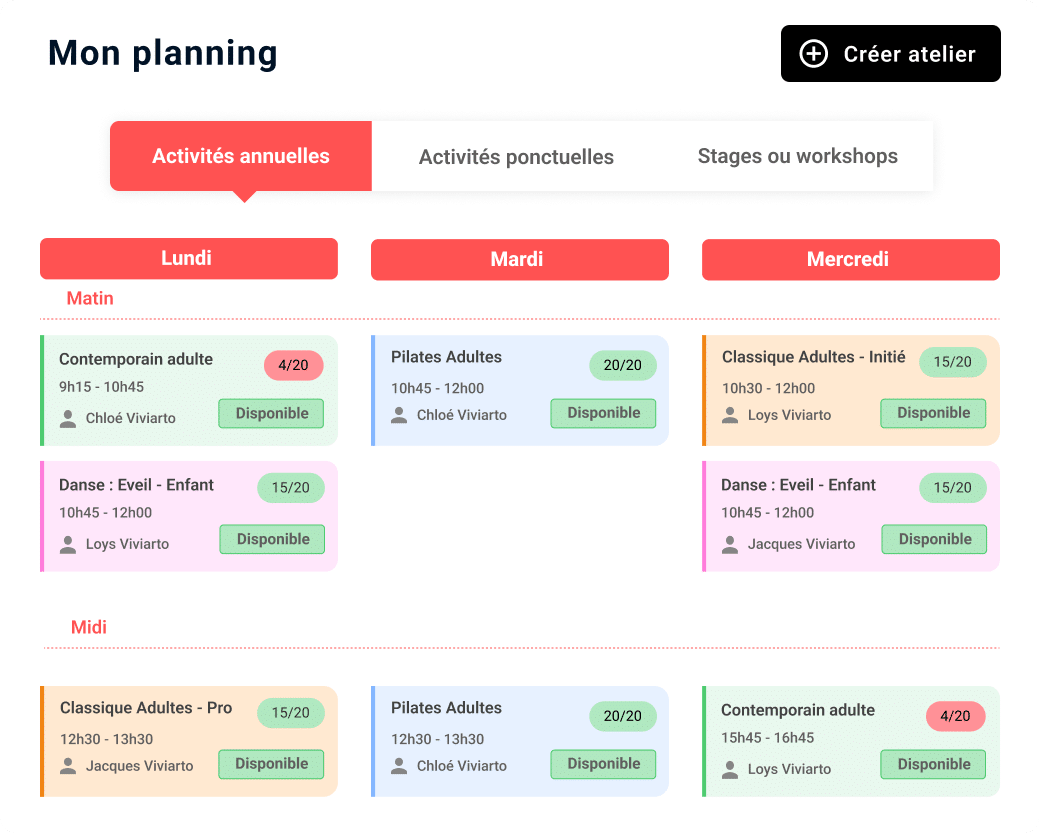
Clear accounts and the right tools not only make internal management easier, but also provide the transparency needed to reassure future patrons. That’s why many organizations choose dance school management software that centralizes registrations, payments, follow-up and administrative documents.
Tax benefits of patronage for corporate patrons
Note: tax rules can change. If in doubt, check the current limits or seek advice (chartered accountant / tax office).
Tax reduction and limits
The tax reduction for corporate patrons is capped: the company can count its donations up to €20,000 or 0.5% of its revenue excluding VAT (whichever is higher). This tax benefit is a strong argument when looking for partners.
Benefits allowed in return: what the law says
Benefits in return are possible as long as they remain symbolic: the customary rule is often ≤ 25% of the value of the donation, with a flat cap frequently cited at around €70. The benefits offered by the association must remain symbolic and proportionate to the donation. They can take the form of thanks, mentions on materials or invitations to shows. Any benefit that amounts to advertising would call the patronage framework into question.
Focus on cultural and artistic patronage
Cultural patronage enjoys particular recognition, because it supports artistic creation and cultural diversity. Dance, as a living and accessible discipline, is fully part of this movement.
Why does a company support a dance association?
Brand image and social commitment
Supporting a dance association strengthens:
- corporate social responsibility
- human values
- cultural engagement
Companies want to be associated with meaningful projects rooted in real life on the ground.
Local roots and support for living culture
Dance associations play an active part in local life. They create social ties, showcase talent and energize their communities — things local businesses particularly value.
Employee well-being and team cohesion
Dance evokes movement, energy and physical expression. These values echo workplace well-being and team cohesion, which makes this kind of project all the more appealing to companies.
Celebrating creativity and the body in motion
By supporting a dance association, a company celebrates creativity, discipline and pushing oneself — qualities that inspire its employees.
How do you set up an effective patronage strategy?
Step 1: Identify relevant corporate patrons
An effective patronage strategy starts with identifying companies that share values with the association. Local businesses and companies involved in cultural or social initiatives are natural targets.
Step 2: Build an attractive patronage offer
Your offer should present:
- the artistic project
- the concrete needs
- the possible forms of patronage
A clear, structured proposal is easier to understand and strengthens the association’s credibility.
Step 3: Set clear, measurable goals
Setting financial goals, a precise timeline and tracking indicators helps you steer your patronage approach and reassure potential partners.
How do you convince a company to support a dance association?
Tell the story and the artistic project
Telling the story of how the association began, its artistic vision and its educational commitment creates a strong emotional connection with companies.
Highlight the cultural and social impact
Companies care about the concrete impact of the projects they support. Explaining the number of participants, the diversity of audiences and the activities carried out locally gives meaning to their commitment.
Adapt your pitch to the company’s profile
Every company has its own priorities. Adapting your pitch to its size, sector and values increases your chances of success.
What materials should you use to find patrons?
The patronage proposal: content and best practices
The patronage proposal remains the central tool of the approach. It presents the association, its projects, its budget and the forms of support sought, in a clear, professional format.
Artistic and visual presentation of the project
Photos and videos of classes or shows convey the association’s energy and artistic world, helping patrons picture themselves in the project.
The role of social media and your website
A consistent, regularly updated online presence strengthens the association’s credibility and showcases its activities to potential partners. Discover our website creation service for dance associations and schools.
Examples of successful patronage in the dance sector
Local patronage: SMEs and dance associations
Many small and medium-sized businesses support dance associations locally, particularly for shows, educational projects or activities for young audiences. The relationship often rests on proximity and trust.
Patronage from large cultural companies
Some large companies support major choreographic projects, tours or artistic residencies. These collaborations require a solid structure and regular communication.
Successful patronage projects rest on a clear vision, smooth communication and a relationship nurtured over time between the association and its patrons.
Mistakes to avoid in association patronage
- Confusing patronage with advertising: overly commercial visibility can call into question the tax eligibility of the patronage and weaken the association.
- Underestimating administrative obligations: imprecise administrative management undermines the association’s credibility and complicates the relationship with patrons. Clear, structured management is essential to reassure your patrons. Here are the key points for running an association well day to day.
- Neglecting the long-term relationship: patronage is a long-term commitment. Keeping in touch with patrons builds loyalty and financial stability.
Patronage as a lever for the lasting development of a dance association
Securing artistic projects for the long term
Patronage helps secure artistic creations and look to the future with greater peace of mind.
Diversifying funding sources
By combining patronage, membership fees and other resources, the association reduces its dependence on a single source of funding.
Building a committed community around dance
Patronage helps bring dancers, volunteers, patrons and audiences together around a shared passion and a shared artistic project.
Key takeaways – Patronage for a dance association
What is patronage for a dance association?
Patronage for a dance association is financial, material or skills-based support provided by a company or an individual, with no direct commercial objective, in the cultural public interest.
Can a dance association benefit from patronage?
Yes, a dance association can benefit from patronage if it operates on a non-profit basis, carries out activities in the public interest and meets the legal obligations of association management.
Which types of patronage are best suited to a dance school?
The best-suited forms are financial, in-kind, skills-based and technology patronage, each meeting concrete needs on the ground.
Why does a company support a dance association?
Companies support dance associations to strengthen their social commitment, enhance their brand image, support local culture and associate themselves with strong values such as creativity and movement.
Does patronage give entitlement to tax benefits?
Yes, in France corporate patrons get a tax reduction of 60% of the donation (and 40% for the portion of donations above €2 million per year, which is fairly rare), within the current tax limits and provided the legal framework is respected.
Is patronage suitable for small dance associations?
Yes, patronage is particularly well suited to local dance associations, especially thanks to support from SMEs and local businesses interested in cultural projects rooted in their area.